

I’ve always been a bit of a history buff—which probably explains why I’ve become such a PR tool geek. Watching the evolution of public relations and marketing technology over the past decade has been fascinating. As we wrapped up our second Tool School (third if you count our original Summer Social), I thought it would be fun to dust off something I wrote a few years ago and update it for 2026.
It’s a whirlwind tour through the history of marketing—from the days when radio was cutting-edge technology to today’s AI-powered tools that can write, create, analyze, and even answer questions in the voice of PR pioneer Edward Bernays.
To appreciate just how far we’ve come, let’s travel back to 1939. World War II had just begun with Germany’s invasion of Poland. The average new home cost $4,100, annual wages were about $1,780, and gasoline sold for just 10 cents a gallon. Yet even as the world stood on the brink of extraordinary change, innovation continued. The Golden Gate Bridge had recently opened, Chicago established the nation’s first blood bank, the BBC pioneered outside broadcasting with the coronation of King George VI—the event made famous in The King’s Speech—and American families gathered around their radios for the CBS World News Roundup.
Looking back, it’s remarkable to consider how innovation often accelerates during periods of tremendous upheaval. In marketing and communications, we’ve arguably experienced more fundamental change over the past 90 years than in the previous 500 combined. Enjoy!
Part 1 – 1920-1949
The pace of change has clearly accelerated, but one thing remains true—marketing is and has always been a blend of art and science. For example, the science news of 1450 was the invention of Gutenberg’s printing press, which would ultimately lead to mass-produced written communications. A not-so-trivial historical sidelight: in 1836 the first paid advertisement ran in a French newspaper, signaling the advent of advertising’s ability to influence the masses for good or ill.
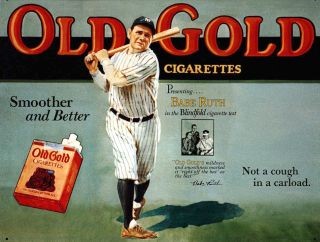 In the 20’s, modern advertising came to the fore with innovative techniques introduced in tobacco advertising—most significantly in the campaigns of Edward Bernays. This pioneer is often considered the founder of Madison Avenue-style advertising and public relations, which, of course, has been equated with “propaganda and manipulation” vs. “education and influencing.” According to Wikipedia, Bernays combined the ideas of Gustave Le Bon and Wilfred Trotter on crowd psychology with the psychoanalytical ideas of his uncle, Sigmund Freud.
In 1922, Keith J. Evans developed sales analysis into a science that clearly defined market potential. His work was instrumental in guiding advertising into the most productive channels available to his company, and it served as a model for others. Radio advertising also began in 1922.
JUST FOR FUN: Have You Ever Asked Edward Bernays for PR Advice?
If you’re a fan of PR history, here’s something worth exploring. The Museum of Public Relations has created “Ask Eddie,” an AI experience that lets you ask public relations questions and receive responses based on the extensive writings, speeches, and ideas of Edward Bernays. The experience even recreates his voice, making it a fascinating way to explore how one of the pioneers of public relations approached communications challenges. Since the AI is based on Bernays’ work, its knowledge ends with his passing in 1995, but you can still present it with modern-day scenarios and ask how he might have responded.
Whether you’re a PR student, educator, history enthusiast, or simply curious, it’s a fun glimpse into PR’s past through today’s technology. You can try it yourself at www.prmuseum.org/ask-eddie, where you’ll also find classroom resources for educators. It’s a fun reminder that while the tools have changed dramatically, many of the principles behind effective communication are timeless.
The Greatest Ad Campaign of its Time (1930-1950)
You can argue that the art and science of marketing really reached a peak in 1939 when DeBeers launched “A Diamond is Forever,” one of the most effective campaigns of the 20th century. Young men, who bought 90 percent of engagement rings, were instructed that diamonds were a gift of love and praised for their business savvy. Women, too, were targeted as DeBeers taught that a successful courtship culminated in a diamond. Famous houses of worship were featured in other ads, establishing a link between a diamond and a religious wedding. Today, diamond engagement rings are commonplace, but were it not for one company and its drive to dominate the industry, history would have been written differently.
Radio and print were the most far-reaching and influential media during most of the 30’s. But that changed in April 1939 when Franklin D. Roosevelt became our first president to appear on TV. The setting was the World’s Fair in New York, and his appearance was broadcast to a mere handful of sets by RCA cameras.
The “Marketing Mix”
During the 40’s, the term marketing mix appeared in an article by Neil Borden, entitled “The Concept of the Marketing Mix.” Borden learned the term from an associate, James Culliton, who described the role of the marketing manager as a “mixer of ingredients”—one who sometimes follows another’s recipe, sometimes adapts a recipe with immediately available ingredients, or sometimes creates his own.
And it was in the 40’s that the mass market ruled. Sponsored shows such as “Bob Hope’s Texaco Star Theater” dominated TV and radio with ads aimed at wide audiences. A historical sidelight: in 1941, the first recorded television ad for Bulova watches ran.
In 1946, at the end of World War II, the Baby Boom officially started. Just as Gen X was the first generation to grow up with computers, 77 million boomers were the first generation to grow up with TV. Enabled by “the tube,” the science of modern demographics developed around this explosion of births and rapidly changing migration patterns.
| Bill Bernbach |
“Let us prove to the world,” wrote Bill Bernbach, in his 1949 manifesto for the creative revolution, “that good taste, good art, good writing can be good selling.” One of the three founders of the international advertising agency Doyle Dane Bernbach, Bill Bernbach directed many of the firm’s breakthrough campaigns and had a lasting impact on the creative team structures now commonly found in ad agencies.
Look for From Billboards to Bots next Friday as we continue with our Just for Fun Friday’s exploring Part 2 – The dawn of computing—the 1950’s.