Catch Me Up:
- Part 1: From Billboards to Bots: Marketing’s Wild Evolution
- Part 2: The Dawn of Computing—the 1950s
- Part 3: The 1960’s (and 70’s): Women flex their marketing muscles
- Part 4: 1980–Y2K: Marketing’s Big Bang
- Part 5: 2000-2010 – the Year the DOT-COM Bubble Burst
By 2010, the “new normal” was already becoming old news.
Edelman’s Trust Barometer was celebrating its 10th anniversary.
Facebook had more than 400 million users, the iPad had arrived, and social media managers were becoming legitimate jobs rather than something you handed to the intern who knew how to use Facebook.
My original version of this series ended here. What I couldn’t know in 2012, when I originally wrote this, is that this was really where marketing’s next great transformation was getting underway.
The Smartphone Changes Everything
Love it or hate it; the smartphone really did change everything.
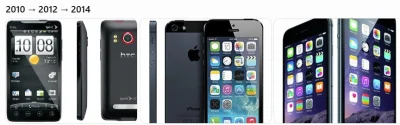
The web was no longer somewhere consumers went when they sat down at a computer. It was in their pockets, purses and hands all day long.
People could search, shop, watch videos, compare prices, read reviews, post opinions and interact with brands whenever—and wherever—they wanted.
For marketers, this meant the audience was no longer waiting for the message.
The message had to meet the audience.
And increasingly, it had to be designed for a screen that was only a few inches wide.
Social Media Becomes a Marketing Platform
Social media also evolved from an interesting new communications channel into a major marketing platform.
Facebook, Twitter, YouTube and LinkedIn were joined by Instagram, Pinterest and Snapchat. Suddenly marketers weren’t just producing advertisements; they were producing content.
Lots and lots of content.
The rise of content marketing was hardly accidental. When consumers could skip commercials, ignore banner ads and install ad blockers, brands needed something more interesting to say.
PR Pros Become Publishers
I held my first PRSA IPA Webinar, “How Content Marketing is Changing PR Storytelling,” in 2014, emphasizing that, for all the reasons discussed, our storytelling now had broader opportunities beyond PR—and that corporations were beginning to hire journalists to come in-house and surface or “mine” their compelling corporate stories.
My point was that we, as the PR pros, could and should do that too. And we have! PR pros became publishers.
Enter the blog post.
The infographic.
The e-book.
The webinar.
The podcast.
The video.
And, eventually, the meme.
From Blogger Outreach to Influencer Marketing
Marketers also became increasingly interested in the people who could help them distribute all that content.
Bloggers, YouTubers and social personalities began building audiences of their own. What started as “blogger outreach” (PRToolFinder did have a specific category for this at one time) and social promotion would eventually become the multibillion-dollar creator and influencer marketing industry.
Marketing Gets Measurable
Meanwhile, marketing automation (led by Marketo who IPO’d in 2013) and increasingly sophisticated analytics were making it possible to track what people did after they clicked, downloaded, watched or visited.
The old marketing question, “Did anyone see our ad?” was gradually becoming: “What did they do next?”
That was a pretty significant change. The science of marketing was getting much more scientific.
But there was a catch.
When Personalization Started Feeling Personal
The more marketers learned about consumers, the more consumers began asking what marketers knew about them.
Personalization could make marketing more relevant, but it could also feel creepy.
Retargeting could remind you about the shoes you had looked at five minutes earlier—but perhaps you didn’t need those shoes following you around the Internet for the next three weeks. Creepy.
And as marketers collected more data, privacy became a marketing issue in its own right.
By 2015, we had entered an era in which marketing could be immediate, measurable, personalized and highly targeted.
We had also entered an era in which consumers were beginning to ask:
Just because you can track me, does that mean you should?
I was already quite a privacy freak long before this, but the question above would become a whole lot louder over the next decade.
The Moving Target That Is “The New Normal”
Quick Review
By 2010, Facebook boasted more than 400 million users. Apple had released the iPad with its advanced multimedia and Internet capabilities, and the Democratic National Committee advertised for a social networking manager to oversee President Obama’s accounts on Facebook, Twitter and MySpace.
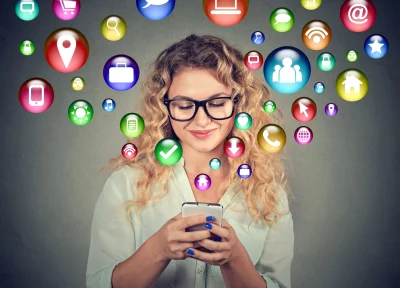
By 2011, social media had become an integral part of our daily lives.
Facebook grew to 550+ million users. Twitter pushed out 65 million tweets a day, YouTube logged a staggering 2 billion video views daily, and 90 million professionals had signed up with LinkedIn.
Public sharing of so much personal information via social media sites raised privacy concerns and landed more than a few prominent people in very hot water.
Today, social networking is part of the fabric of our society as people routinely use smartphones and tablets to access their favorite sites and apps for business and entertainment.
When the Internet Became the Newsstand
In 2012—for some (myself included), a sad day, as the Internet surpassed newspapers as the primary news outlet for Americans, according to the Pew Internet and American Life Project.
The Internet was the third-most-popular news platform, with many users looking to social media and personalized feeds for news. National and local TV stations remained strong, but the Internet beat out national and local newspapers.
The Social Landscape Keeps Changing
In 2013, the top 10 social networks were Facebook, Blogger, Twitter, WordPress, LinkedIn, Pinterest, Google+, Tumblr, MySpace, and Wikia.
Today they are Facebook (3.1+ billion monthly active users), Instagram (3 billion), WhatsApp (3 billion), YouTube (2.5 billion), TikTok (2+ billion), WeChat (1.4 billion), Facebook Messenger (1 billion), Telegram (1 billion), Snapchat (900+ million), and Reddit (850+ million).
Today, more than three-quarters of employees admit to using social media during work hours. The fact that 96 percent of Gen Z phone users reportedly take their phone into the bathroom, compared to 90 percent of millennials, demonstrates (and confirms) the overwhelming dependence younger generations have on smartphones.
All of them use social networks to stay connected, informed and amused.
The Promise—and Question—of One-to-One Marketing
Allaboutmarketresearch predicted that by 2015, one-to-one marketing would be the name of the game.
Demographics and individual consumer behavior patterns would allow marketers to create individualized marketing messages—even on TV!
Predictive analysis would support this effort as big data revealed more and more about our buying behavior.
We wondered even then….
“Is this a good thing?”
Join us next week for Episode 7 of our History of Marketing: 2016–2020: The Algorithm Takes the Wheel
Not an email subscriber yet? Sign up here and stay up-to-date with PRTech’s new products & trends!